
A full-capacity workshop brought around 40 participants together to explore how agricultural AI can become more reliable, accessible, and responsive to user needs.
On 20 October 2026, AgriScienceFM and BioValueAI jointly organised the workshop “How to facilitate the development of AI-based Solutions: Foundation Models and Validation of User Needs” at Synergy Days in Kilkenny, Ireland. Synergy Days is an annual conference that brings together digital innovators in the European agrifood sector with potential prospects to build synergies, exchange knowledge and experiences. The session connected perspectives on foundation-model development with the practical challenges of validating AI solutions in agriculture and bio-based value chains.
Around 40 people attended, filling the room to its capacity. Through presentations, Mentimeter questions and discussions across six breakout groups, participants examined research priorities, stakeholder collaboration, data governance and infrastructure needs.
Connecting technical research with stakeholder perspectives
Sander Janssen chaired the workshop, opening with an introduction to AI and foundation models. Marina Estévez Almenzar, from Barcelona Supercomputing Centre, and Pieter-Jan De Temmerman, from ILVO, presented AgriScienceFM’s review of technical and social risks in agricultural AI. Their contribution addressed performance under changing field conditions, fairness, access barriers and governance, alongside the role of FAIR data and shareable research resources.
Bart Van Droogenbroeck presented BioValueAI’s perspective on stakeholder needs and the validation of AI-based solutions in bio-based value chains. The presentation emphasised that technical performance alone is insufficient: solutions also need to meet organisational requirements, protect sensitive knowledge and demonstrate their usefulness through real-world testing and user feedback.
Mentimeter insights on participants' background and their expectations
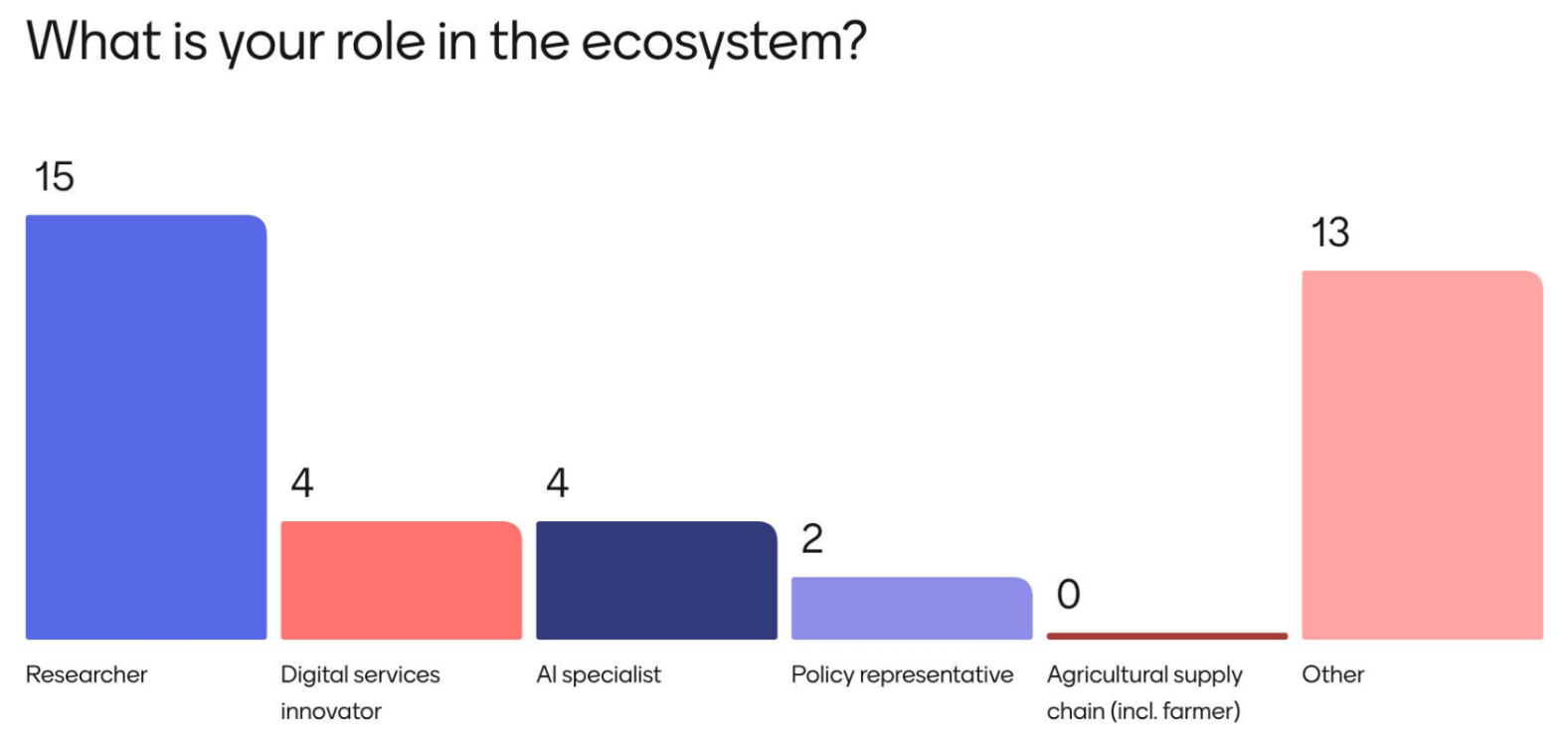
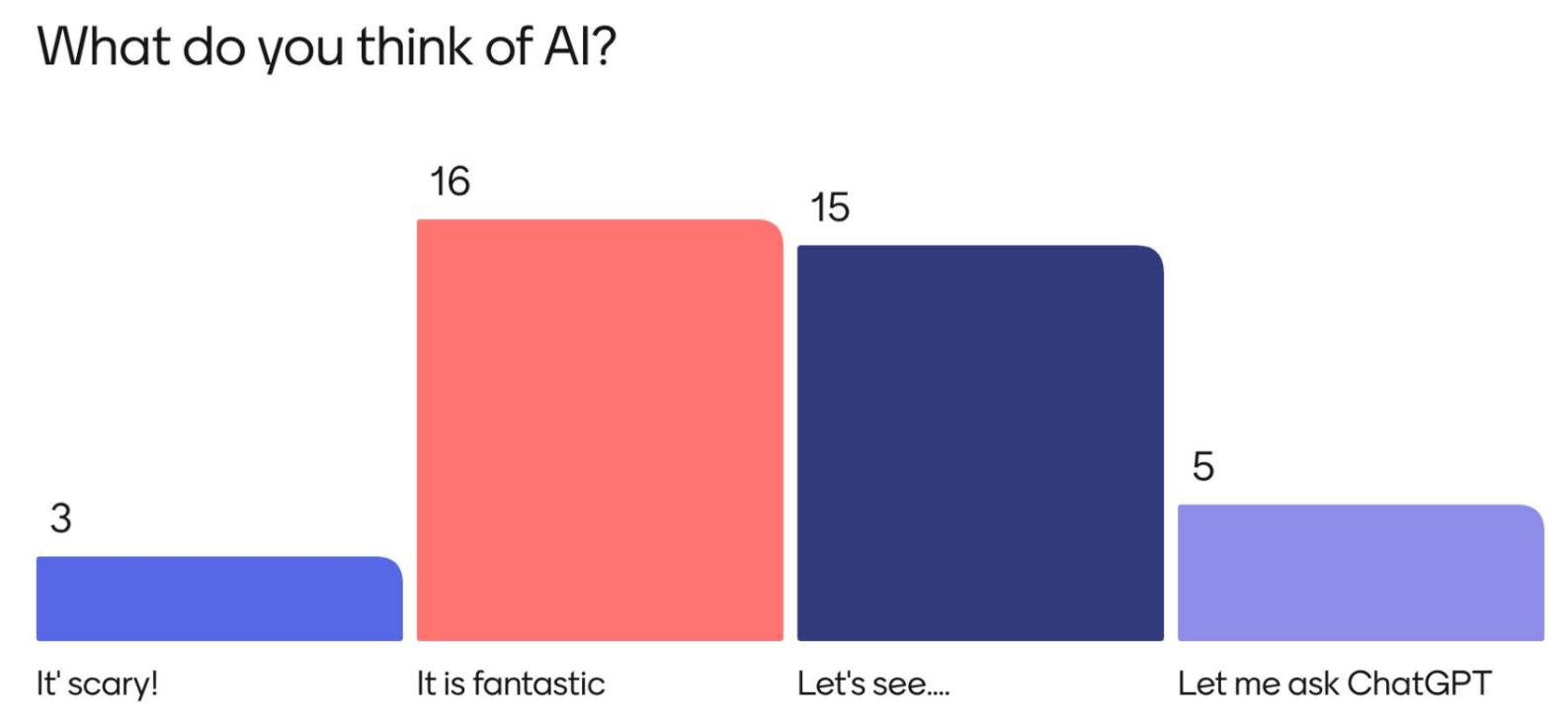
Six breakout groups explored what needs to happen next
The round-robin exercise invited participants to examine findings from literature on AI in agriculture more generally (11 papers). indicate where they agreed or disagreed, and identify missing issues. Discussions connected technical questions with stakeholder needs and the conditions for wider adoption. The combined feedback from the six groups highlighted four connected themes.
1. Moving beyond prototypes towards field validation
Participants emphasised the need to move from laboratory prototypes to evaluation under real-world conditions. They highlighted the time and resources required for this transition, including the expense of developing large, high-quality datasets.
The discussion also raised a fundamental question: how ready are current AI solutions for practical use? Alongside interest in integrating AI into processing operations, participants stressed the need for evidence that systems are reliable and affordable for farmers not simply technically promising.
2. Building collaboration that can last
Stronger collaboration between farmers, researchers, and other stakeholders emerged as a priority. Participants highlighted the need for sustainable business models that allow these groups to work together beyond individual research activities.
Possible incentives from public authorities, including tax advantages, were raised as ideas for further consideration. The groups also asked how collaboration could effectively involve small-scale farmers, whose resources and circumstances may differ substantially from those of larger or more profitable businesses.
3. Clarifying data ownership, sharing and value
Data discussions went beyond availability and quality to consider who owns agricultural data, who can share it, with whom and for what purpose. Participants also questioned who benefits financially from its use and how that value is generated and distributed.
Concerns about data quality were closely connected to transparency: users need to understand both the data informing an AI system and the limitations of the model itself. These questions highlighted the importance of addressing ownership, sharing arrangements, and transparency alongside technical development.
4. Addressing infrastructure needs and the digital divide
Participants raised concerns about differences in access to digital infrastructure and computational resources, particularly for smallholder farmers and less profitable farming businesses. Affordability and access were therefore discussed as central considerations, rather than issues to address only after a system has been developed.
The groups also considered differences between small and large language models, particularly their training requirements. Further questions concerned how models could remain useful as information changes: how frequently they should be updated or retrained, and how different versions should be managed.
5. Continuing the conversation
The workshop connected questions about AI performance with the practical conditions needed for its use: appropriate validation, sustained collaboration, transparent data arrangements, and accessible infrastructure. The breakout observations provide input for further review and dialogue, rather than a final consensus on how these challenges should be resolved. AgriScienceFM will consider these observations in its ongoing state-of-the-art review and stakeholder needs assessment to help identify research gaps, user requirements and risks. Stakeholders can continue contributing through future workshops and webinars, with opportunities announced through the project’s newsletter and communication channels.
AgriScienceFM welcomes contributions to its state-of-the-art review on AI in agriculture, including relevant research, practical experiences, user needs and gaps that deserve further attention. Participants and other interested stakeholders are also encouraged to stay connected with AgriScienceFM and BioValueAI through their newsletters and social media channels for future events, workshops and opportunities to collaborate. Thank you to our co-organisers, speakers, facilitators, and everyone who contributed to the discussions.
AgriScienceFM is funded by the European Union under Horizon Europe Grant Agreement No. 101293777.